20 Best Tips For Picking Termite Control Services In Jakarta
Wiki Article
Termite control strategies in Java Indonesia
The phrase "island wide exclusion" could appear to be a grandiose construction project, but in the case of Jakarta's anti-termite program, it's actually an investigative technique derived from biogeography. Every building is an ecological island importance surrounded on all sides by compacted dirt as well as utility trenches, pavement and. The same principles that helped determine if termites recolonized Krakatau following 1883 determine if there are Coptotermes colonies can cross the concrete driveway that measures five meters to get to the Menteng home. Exclusion is not a way to poison each Jakarta termite. It is about engineering conditions which make it impossible to cross.
1. Sterilization is always more effective than poisoning
Quarantine is the only method that has been proven to be effective in eradicating an entire island. For Jakarta homes, this refers to heating treatment of the wood that is infested during renovation. By sending infested wooden waste to landfill, the colony will not be eradicated. Professional exterminators are required to incinerate and heat the of the waste that is infested on site.
2. Chemical composition of soils is an element in the creation of exclusion zones
The soils in certain Indonesian islands are either too alkaline, or they lack enough nutrients. Jakarta anti-termite is able to recreate this condition on an individual level. pH modification beneath slabs as well as around foundation perimeters--using buffered or agricultural sulfur--creates the soil that termites that grow fungus are unable to enter through. The soil is not required to be toxic. It is just required to be an unfriendly environment.
3. Connectivity The Lifeline of the Colony
Subterranean termites do not invade as individual species. They are a superorganism, which spreads across foraging tunnels. Severing landscape connectivity--removing wooden fences that contact soil, replacing organic mulch with river stone, eliminating brush piles and timber debris--fragments the colony into isolated pockets that eventually starve. The property line is where the island-wide ban starts and ends, not at the wall of the foundation.
4. Macrotermitinae Cannot Cross Pavement
To keep their symbiotic gardens, fungus-loving termites like Microtermes, Macrotermes and Odontotermes need soil. Contrary to Coptotermes that will build tubes of protection over concrete forever Fungus eaters are unable to build satellite nests in isolated planter boxes or planters that are elevated. This entire feeding guild is completely blocked off by a continuous vapor barrier under the whole structure.
5. Tanjung Priok Port Is Jakarta's Achilles Heel
The island-wide exclusion is dissolved when the infested wood arrives from outside the zone of quarantine. Tanjung Priok is the principal entry point for Coptotermes, Nasutitermes, and other wood colonies. Anti-termite inspections should not only focus on just the structure that is in place but also the wood that has been introduced into the property following treatment.
6. The Exclusion Infrastructure of Wood species
Jakarta's supply of timber is mostly dominated by Acacia Mangium, Paraserianthes Falcataria and Hevea Brasiliensis. The three species are all non-durable and are extremely attracted by subterranean termites. This is similar to setting up bait stations in form of architecture when you choose the species you want to use for doorframes windows, window jambs, as well as structural repairs. Exclusion is only possible if specified prohibited species lists are included in renovation contracts.
7. Moisture Gradients Are Unavoidable Foraging Highways
Termites don't build mud tube because they like construction, but because the cuticles of their cuticles are dehydrated below 70% relative humidty. Every evaporative zone--leaking condensate lines inside air conditioners, poorly graded flowers beds, dripping water bibs- creates a moisture gradient that creates an attraction. When moisture audits are not form part of preventive inspections is lost.
8. Above-Ground colonies signalize a the perimeter breach
Coptotermes Gestroi reaches the true island colonization by establishes cardboard nests within wall cavities or rooftop spaces. The colony can now survive without contact with the ground. The exterminator must treat the aerial nest as though it were a fully infested island, which requires an entire enclosure with a fumigation.
9. Baiting Is Surveillance, Not Exclusion
Perimeter baiting stations exclude termites. They can eliminate colonies within the station's foraging area. In the worst case, these stations could serve as food sources for colonies that are not able to survive in times of drought. A true exclusion is only feasible with physical barriers such as the graded stone, bonded sand membranes, polymer membranes as well as stainless steel mesh.
10. The 1.6 Million House Precedent
Dutch colonial authorities rebuilt or renovated more than 1.6 million Javanese residences from 1911 to 1942 as part of the effort to rid the city of plague-infested bamboo structures. They succeeded epidemically but were unsuccessful in the cultural sense; bamboo was banned and traditional dwellings were destroyed and the vernacular was severed. Jakarta antitermite services must today remember that exclusion forced without consent can be interpreted as the erasure of knowledge. The best exclusion methods are ones that homeowners comprehend and follow voluntarily.
The article's conclusion is:
Chemical application programs are not sufficient to eliminate termites from an entire island. It is accomplished through the manipulation of habitats, materials quarantine, the construction of physical barriers and the deliberate engineering of inhospitable chemistry. Krakatau showed that sterilization with strict quarantine could stifle the eruption on a vast scale. Jakarta anti-termite solutions cannot replicate volcanic eradication, but they can operationalize every other lesson that island biogeography that has resulted. Termites can cross water using floating wood. Termites cross the pavement using concrete edges. They traverse property lines on organic mulch. Exclusion is a method of discipline that involves eliminating all vessels. Have a look at the top rated jasa anti rayap for website examples including jasa pest control, rayap kecil, pintu anti rayap, rayap kecil, perusahaan pest control, penyebab rayap, pintu anti rayap, rayap pekerja, pembasmi rayap kayu, lemari anti rayap and more.
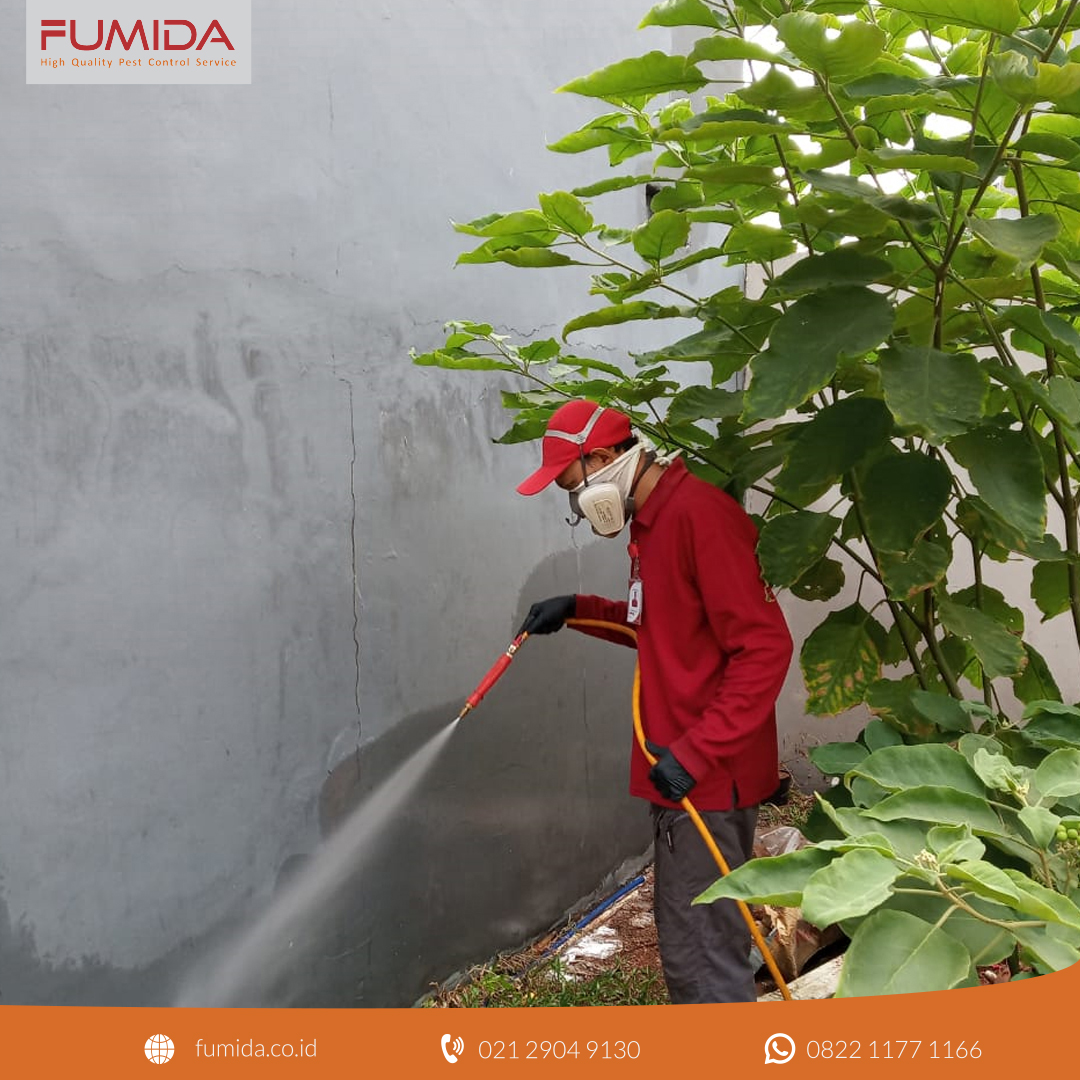
Above-Ground Baiting In Jakarta For Asian Subterraneans
Jakarta homeowners tend to think that termite trapping is just a matter of placing plastic stations in their gardens and observing them periodically by technicians who enter the station, then shrug their shoulders and walk away. This is a form of perimeter control not extermination of colonies. Baiting aboveground is a completely different field. The station isn't submerged but is fixed directly to an active mud tube or placed against the excavated damages. The termites do not have to locate the bait; the bait is put into their commuter highway. For Asian subterranean species--Coptotermes gestroi, Coptotermes curvignathus, Microtermes insperatus--above-ground delivery bypasses every behavioral barrier that makes perimeter baiting slow and uncertain. Jakarta anti-termite service vehicles which don't have above-ground stations are equipped to check the area, not to treat.
1. Above-Ground Stations require active infestation
Perimeter baiting relies on speculation. The stations are put up, and technicians await for termites to search them out. Above-ground baiting relies on confirmation. The station can only be put in place after the mud tubes or wood that is damaged have been identified. There is no limit, it is efficiency. In sterile dirt, no plastic is ever buried. No technician is required to oversee stations that don't receive a hit.
2. Mud Tubes are now Delivery Infrastructure
Above-ground stations can be constructed to complement existing termite-based construction. The base of the station is an enclosed chamber over the mud tube. Termites that are traveling from nest to feeding sites can pass through the station and come into contact with the bait matrix they eat as they continue their travels. The tube is not damaged. The pattern of commuters does not change. The colony uses its own infrastructure to poison itself.
3. Palatability Testing Is Different for Above-Ground Delivery
The colony is already doing the wood taste test. The location of the feeding site is confirmed. Above-ground bait matrices need only be acceptable, not maximally attractive. The formulation is slack and toxicants may be added that are slower acting that would otherwise be rejected because they compete with untreated wood surfaces. Jakarta exterminators are required to carry several formulations of baits to choose according to the feeding preferences observed at the specific locations of infestation.
4. Recruitment Multiplier with Self-Seeding
The feeding starts immediately after the termites are transferred from the wood into the chamber that is used for recruitment at the above-ground station. The termites that are introduced have already become accustomed to their local environment and foraging rhythm. They start eating bait and recruiting nestmates by trophallaxis. This one action increases the rate of delivery of toxicants by about 30 percent. The biological assets are lost when termites are killed by exterminators by scraping them off damaged wood.
5. Coptotermes gestroi Responds Rapidly Above Ground
Coptotermes gestorii, and in particular, Asian subterranean termites are active all year round. Above-ground stations placed on active infestations of this species generally have feeding rates of around forty-eight hrs and an observable consumption of baits within one week. The timeframes for removing colonies is decreased from months to a matter of weeks. Companies that offer six-month timeframes for above-ground baiting are using suboptimal matrices or failing to move termites that are recruiting.
6. Microterms and macroterms require different Position
Macrotermes (Microtermes) and termites that grow fungi, like Macrotermes insperatus and Macrotermes Gilbert are not able to construct mud tubes to the same degree as Coptotermes. Their foraging above ground is more diffuse and they typically conceal their food sources in the wood. To use bait above the ground it is essential to excavate the damage site and insert the matrix directly into the feeding cavities. Station geometry is different. Jakarta exterminators attempting Coptotermes protocols against Microtermes infestations could observe the microtermes infestations in a low-uptake manner.
7. Moisture Conditioning Is Non-Negotiable
Above-ground lure matrixes can be manufactured to specific levels of water activity. Jakarta's ambient humidity causes water exchange with the surroundings. Bait stored in your toolbox of the vehicle for a couple of weeks is dehydrated; bait left out on site, unprotected from atmospheric moisture and without its packaging, could be ruined. Exterminators must condition bait cartridges prior to installing them by using water in the proper amount.
8. Inspection Frequency Compresses
Programs for perimeter baiting run according to inspection cycles that are either quarterly or biennial. Aboveground baiting follows a week-long schedule. Infestations in progress consume bait fast; depleted cartridges need to be replaced in a matter of days, not months. The destruction of colonies is confirmed when the feeding ceases and the it begins to dry up. Companies that schedule above-ground bait checks on their standard perimeter monitoring timeline will observe bait depletion, assume the treatment is proceeding, but miss the colony recovery window.
9. Warranty Underwriting Requires Different Types of Insurance
Perimeter-baiting guarantees are priced in accordance with the density of stations and frequency of inspection. Above-ground warranty rates are determined by species identification and infestation extent. A single Coptotermes enterosus colony through a threshold of a door is covered for standard rates. A multi-colony Microtermes infestation distributed across an entire ground floor requires different risk-based modeling. Jakarta anti-termite companies who cost the same for both scenarios do not accurately estimate risk.
10. Above-Ground is diagnostic and not just therapeutic.
The amount of bait consumed as well as the ratio of casting termites found in stations and the place of mud tube attachment provide forensic data about colony health and foraging range. Rapid consumption indicates resource-stressed colonies. Abandonment after consumption indicates colony removal. The tubes of mud will become darker if there is less traffic. Exterminators who are trained to detect these signals can alter the parameters of treatment in real-time. The most effective method of controlling termites is not being used by exterminators that simply switch cartridges.
You can also read our conclusion.
Baiting above ground for Asian subterraneans does not constitute an additional service; it is an intervention that differentiates inspection firms from colony removal specialists. Perimeter baiting monitors. Above-ground baiting provides pleasure Perimeter-baiting is waiting to be discovered. Above-ground baiting experts face difficulties. Perimeter baiting can result in quarterly service tickets. Above-ground encapsulation results in definitive colony removal and the renewal of the warranty. Jakarta anti-termite treatments that delay the adoption or above ground protocols typically cite equipment cost and technician training requirements. They aren't obstacles; they are investments. The cost of equipment is expected to be paid back in the initial three above-ground deployments. The investment in training pays retention dividends as technicians transition from generalist applicators to specialist diagnosticians. Multi-bait matrices can be used to differentiate premium exterminators and commercial exterminators. Infested homeowners do not require surveillance of their perimeters. The colony has to be eliminated. Above-ground poisoning is the ideal method to accomplish this. Jakarta exterminators scrape or inject soil, however they don't set up above-ground baiting stations. The colony will continue feeding throughout the day while the exterminator is working. Check out the best anti rayap for site recommendations including perusahaan pest control, anti rayap kayu, cara membasmi rayap, anti rayap untuk kayu, kayu yg tidak dimakan rayap, pest control harga, jasa anti rayap tangerang, cara membasmi rayap di lemari kayu, jasa rayap, kayu yg tidak dimakan rayap and more.
